


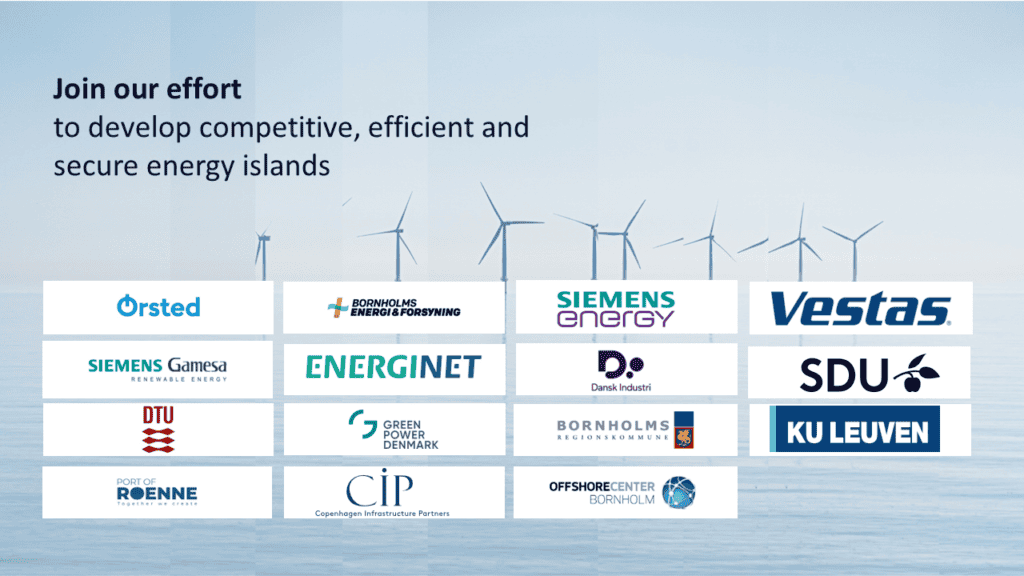
We are a partnership for international stakeholders engaged in energy islands, offshore energy hubs and grids.
We believe that we need collaborative innovation to create a strong competitive platform.
We will make energy islands a success.
Publish a roadmap for energy island innovation.
Each year in autumn Energy Island Forum will publish an R&D roadmap for energy island innovation. The roadmap will focus on five fields of innovation.
Produce white papers for selected focus areas.
Focus areas will be identified within the five fields of innovation. A white paper for each focus area will be published each year during spring at the Summit.
Initiate joint innovation projects.
Based on recommendations in white papers, joint innovation projects will be initiated.
Power and energy system
Focusing on e.g. solutions for a converter-dominated energy system, enabling validating multiterminal/multivendor HVDC and energy island digital twins.
Offshore wind for OEH
Focusing on e.g. cost-effective wind turbines and plants, designed for energy islands, control and regulation of wind turbines and plants connected to energy islands, grid codes and multi-technology wind power plants.
P2X and green fuels
Focusing on e.g. offshore PtX plant design, wind/PtX-plant dynamic interaction, integration of energy storage and potential grid support functions.
Society and environment
Focusing on e.g. societal acceptance and citizen engagement in large scale projects, value creation in local communities and biodiversity standards for energy islands.
Regulation transversal issues
Focusing on e.g. models for fair cost-benefit sharing, socioeconomic calculations for energy islands, tendering processes, and standards for construction of energy islands.
Influence on energy island R&D
Drive the national and international innovation agenda for energy islands to align it with your business objectives.
Impact on funding and regulation
Shape the course of EU and national funding and regulation and get exclusive access to the consortia where the innovation is carried out and funded.
Be part of a network across value chains
Be part of the leading network across the value chain, where the future direction for energy islands is set.
Get early access to projects and knowledge
Get first-hand access to pioneer knowledge and innovation projects in your business area.
Contact:
Nicole Sentse
Project Developer · Baltic Energy Island
+45 2048 8113
nss@balticenergyisland.com
| Cookie | Duration | Description |
|---|---|---|
| cookielawinfo-checkbox-analytics | 11 months | This cookie is set by GDPR Cookie Consent plugin. The cookie is used to store the user consent for the cookies in the category "Analytics". |
| cookielawinfo-checkbox-functional | 11 months | The cookie is set by GDPR cookie consent to record the user consent for the cookies in the category "Functional". |
| cookielawinfo-checkbox-necessary | 11 months | This cookie is set by GDPR Cookie Consent plugin. The cookies is used to store the user consent for the cookies in the category "Necessary". |
| cookielawinfo-checkbox-others | 11 months | This cookie is set by GDPR Cookie Consent plugin. The cookie is used to store the user consent for the cookies in the category "Other. |
| cookielawinfo-checkbox-performance | 11 months | This cookie is set by GDPR Cookie Consent plugin. The cookie is used to store the user consent for the cookies in the category "Performance". |
| viewed_cookie_policy | 11 months | The cookie is set by the GDPR Cookie Consent plugin and is used to store whether or not user has consented to the use of cookies. It does not store any personal data. |